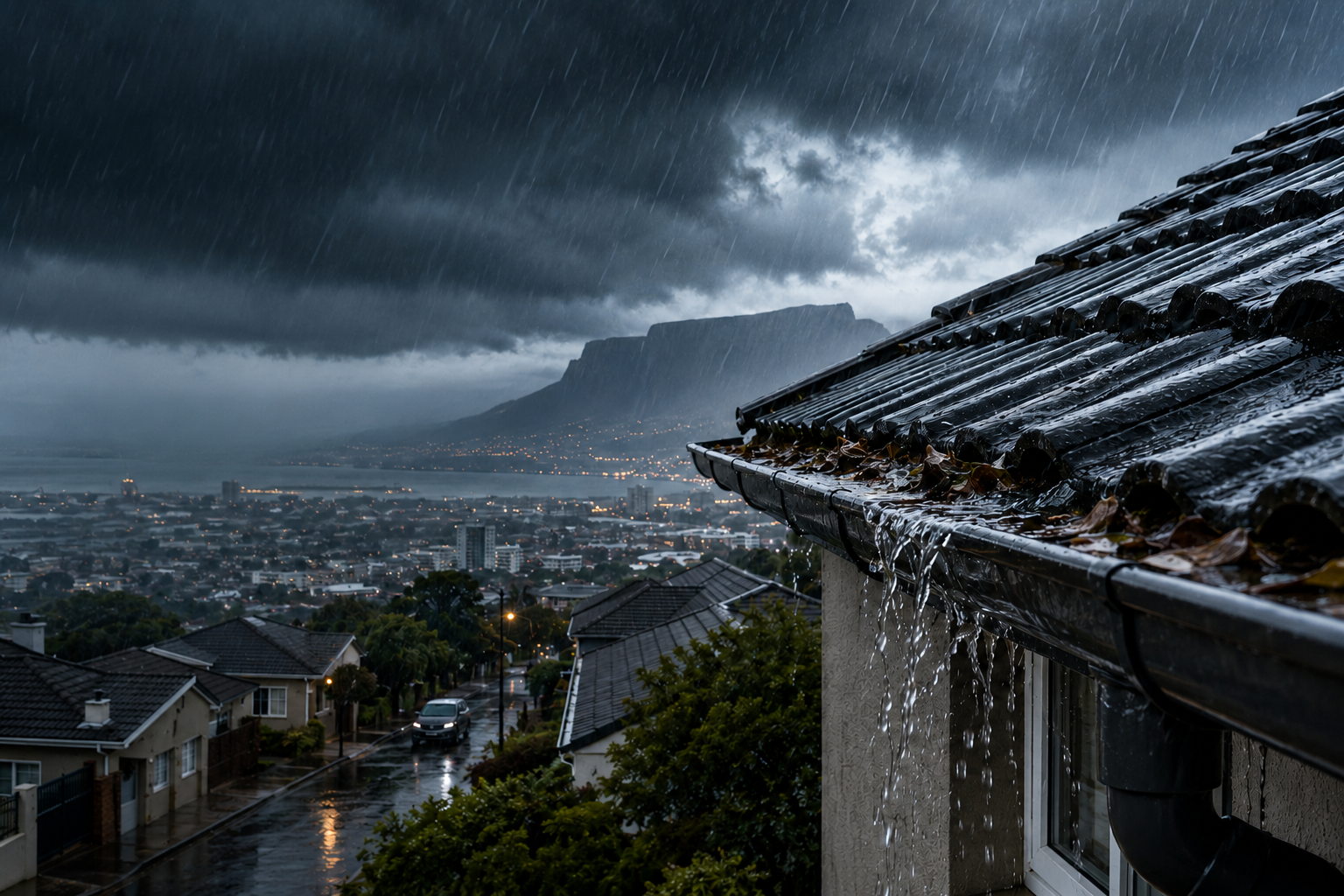
Anyone who has lived through a Cape Town winter knows how quickly a small roof leak can become a major problem once the heavy July storms arrive.
From flooded garages in the Northern Suburbs to damp walls in older Southern Suburbs homes, winter weather causes thousands of rands in property damage across the Western Cape every year.
Cape Town's heaviest rainfall usually arrives between June and August, often combined with strong northwesterly winds, sudden cold fronts, and extended wet periods that place extra pressure on roofs, drainage systems, and electrical infrastructure.
Minor roof repairs in Cape Town can range from R1,500 to R8,000 depending on the damage, while major waterproofing projects may cost significantly more if left untreated during peak winter.
1. Inspect Your Roof Before Heavy Rain Starts
Your roof is your home's first line of defence during winter. Unfortunately, many homeowners only discover roofing problems once water starts dripping through ceilings during a storm.
Older homes across areas like Plumstead, Claremont, Bellville, and Somerset West are especially vulnerable to roof leaks and weather-related wear.
Look out for:
- Cracked or missing roof tiles
- Rust on roof sheeting
- Loose flashing around chimneys
- Water stains on ceilings
- Sagging gutters
- Signs of previous water damage
A small issue during autumn can quickly become a major ceiling collapse once winter storms intensify.
2. Clean Gutters and Drainage Systems
Blocked gutters are one of the most common causes of winter water damage in Cape Town homes.
Leaves, sand, and debris can prevent proper drainage, causing water to overflow into roof spaces, walls, foundations, and outdoor entertainment areas.
Make sure you:
- Clean gutters before winter starts
- Check downpipes for blockages
- Inspect outdoor drainage systems
- Remove debris around stormwater drains
Homes near trees or steep slopes often require more frequent gutter maintenance during storm season.
3. Protect Against Damp and Mold
Damp problems become especially common during long wet periods. Coastal moisture, poor ventilation, and hidden leaks can quickly create mold issues inside homes.
Common warning signs include:
- Peeling paint
- Musty smells
- Bubbling walls
- Dark patches on ceilings
- Condensation around windows
Ignoring damp problems can eventually lead to structural damage and expensive repairs.
4. Prepare for Load Shedding During Storms
Winter storms combined with load shedding can place extra pressure on electrical systems, especially during sudden outages and power returns.
Homeowners should consider:
- Surge protection for appliances
- Battery backup systems
- Safe generator installations
- Checking outdoor electrical connections
- Emergency lighting solutions
Faulty electrical systems during wet weather can become dangerous very quickly, particularly in older homes.
5. Check Outdoor Areas and Drainage
Heavy rainfall can also damage paving, retaining walls, gardens, and outdoor structures.
Inspect:
- Pool drainage systems
- Retaining walls
- Garden runoff areas
- Wooden decking
- Outdoor paving slopes
Poor drainage around your property can eventually affect foundations and interior walls over time.
Final Thoughts
Preparing your home before Cape Town's winter storms arrive can help prevent costly repairs, improve safety, and reduce stress during severe weather.
A small amount of preventative maintenance now can save thousands of rands later during peak winter.
Whether you need roofing repairs, waterproofing, plumbing, electrical work, or general home maintenance, FixConnect can help you connect with trusted local contractors across the Western Cape.